NAIJA/S.A COLLAB

Wasse Marlvine
7 Min Read

Africa at the Crossroads: Nigeria and South Africa’s Mining Pact Heralds a New Era of Unity and Resource Sovereignty

By Wasse Marlvine
Published: April 19, 2025

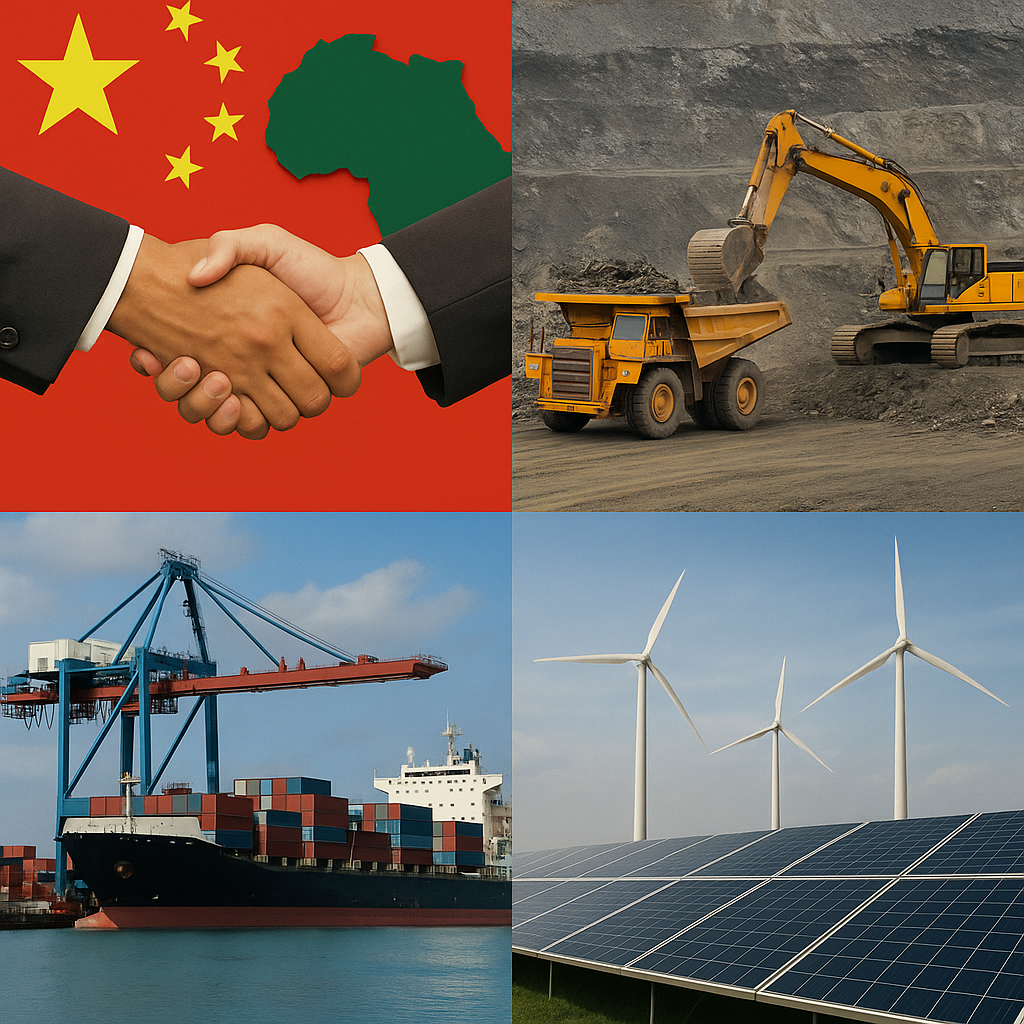
In a bold and historic move set to reshape the future of African collaboration, Nigeria and South Africa — the continent’s two largest economies — have signed a landmark Memorandum of Understanding (MoU) to deepen cooperation in the mining sector. More than just a business deal, the agreement represents a powerful symbol of reconciliation, mutual respect, and a long-overdue shift toward African-led development.

The Pact That Could Change the Continent

The agreement, signed on April 17, 2025, in Abuja, was formalized by Nigeria’s Minister of Solid Minerals Development, Dr. Dele Alake, and South Africa’s Minister of Mineral Resources and Energy, H.E. Gwede Mantashe. It outlines a multifaceted collaboration that includes:

  • Geological mapping using drone technology
  • Exchange of mineral data and technical expertise
  • Joint exploration and development of agro and energy minerals
  • Capacity building and training in mineral processing and value addition

“This is not just an agreement; it is a statement,” Dr. Alake said during the signing ceremony. “A statement that Africa is ready to rise, together. We are breaking from the past where external players dictated the terms of our development. Today, we are writing those terms ourselves.”

Minister Mantashe echoed that sentiment. “This collaboration is about far more than mining. It’s about trust, vision, and a united future. South Africa stands with Nigeria and with the rest of Africa in our collective journey toward economic sovereignty.”

From Rivalry to Partnership

For decades, the relationship between Nigeria and South Africa has been marked by diplomatic friction, economic competition, and at times, open hostility — from xenophobic tensions to trade disagreements. But this landmark agreement appears to signal a shift away from rivalry toward a partnership based on mutual benefit and shared growth.

In many ways, this is a long-overdue reconciliation. The two powerhouses have complementary strengths: Nigeria boasts untapped reserves of gold, lithium, iron ore, and limestone; South Africa brings decades of mining expertise, advanced technologies, and established global partnerships. Together, they form a formidable alliance with the potential to lead Africa into a new industrial era.

“We can no longer afford division,” said Ambassador Bianca Odumegwu-Ojukwu, Nigeria’s Minister of State for Foreign Affairs, during pre-agreement discussions. “The future of our people depends on collaboration, on African solutions to African challenges.”

A Wake-Up Call for the Continent

The agreement could not have come at a more critical time. As geopolitical tensions in Europe escalate — with nations rearming, industries shifting, and supply chains being redrawn — the global hunger for strategic minerals has surged. Africa, rich in rare earths and essential metals, is once again in the crosshairs of global powers.

History has shown us how quickly African nations can become pawns in the great game of resource extraction. From colonial plunder to modern neo-extractive agreements, the continent has often been on the losing end of its own wealth. The pact between Nigeria and South Africa offers a blueprint to change that.

“This is a call to action,” said Dr. Adama Konaré, an economic historian at the University of Dakar. “If we do not protect our mineral resources now, we risk falling into a new era of economic colonization — this time driven by green energy needs, digital economies, and geopolitical rivalry.”

A Call for Pan-African Resource Sovereignty

The Abuja pact must not be seen in isolation. Rather, it should be the first step in a continent-wide push for mineral sovereignty and resource nationalism — not in a way that deters investment, but in a way that ensures Africans reap the true benefits of their land.

We call on African leaders — from the Sahel to the Southern Cape, from the Horn to the Congo Basin — to rise to this moment. Let this pact inspire bilateral and regional partnerships that strengthen local industries, promote value addition, and deter external exploitation. Let us invest in African refineries, smelting facilities, geological institutions, and data sovereignty.

Because the truth is stark: the world is shifting, and Africa’s minerals are more valuable than ever.

Will we export raw rocks while others build industries from them?

Or will we, finally, refine our wealth for ourselves and for generations to come?

Africa Rising — Together

In every way, this mining pact reflects the best of what the African Union’s Agenda 2063 envisions — a prosperous, integrated, and peaceful continent, driven by its own citizens and representing a dynamic force in the global arena.

From Lagos to Pretoria, the signing has sparked optimism, especially among young professionals and technocrats who see this as a tangible step toward real African empowerment. Social media has been buzzing with hashtags like #AfricaRising, #ResourceSovereignty, and #MiningForAfricans — a testament to how deeply the symbolism of unity resonates.

“This is bigger than economics,” said Zanele Khumalo, a Johannesburg-based mining analyst. “This is about dignity. This is about Africa finally realizing its worth.”

And indeed, with this agreement, two of Africa’s giants have signaled their readiness to lead — not by dominating one another, but by walking forward together.

Let this be the beginning.
Let this be the blueprint.
Let this be the moment we stopped looking outwards and started building inwards.

Share This Article
Leave a Comment

Leave a Reply

Your email address will not be published. Required fields are marked *