U.S. Tariff Relief Buys Time — But Africa Can No Longer Afford to Waste It
By Wasse Marlvine
April 11, 2025

When news broke this week that the United States would grant temporary relief from steep tariffs to a handful of African nations, there were immediate sighs of relief from factory floors in Lesotho, cotton farms in Madagascar, and trade offices in South Africa.
But while African leaders and business interests scramble to call the move a diplomatic “win,” the truth is harder, more urgent, and far more uncomfortable: this is not a victory. It is a warning — a thinly veiled reminder that Africa remains at the mercy of decisions made in faraway capitals, driven by interests that rarely align with its own.
And once again, the clock is ticking.
AGOA: A Lifeline That’s Losing Strength
At the heart of this story is the African Growth and Opportunity Act (AGOA) — a piece of U.S. legislation passed in 2000 to support trade between the United States and Sub-Saharan Africa. For 25 years, AGOA has allowed eligible African countries to export a wide array of goods to the American market duty-free.
It was hailed as a breakthrough. And in many ways, it was. It gave rise to garment factories in Maseru, helped sustain agriculture in Mozambique, and allowed South Africa’s automotive parts to roll across American highways.
But AGOA was never permanent. It came with an expiration date — and that date is fast approaching: September 30, 2025.
This week’s decision to delay the imposition of harsh new tariffs on key sectors in Lesotho, Madagascar, and South Africa does not change that. It simply postpones the pain.
As U.S. lawmakers argue about the future of AGOA, African exporters are left watching from the sidelines, knowing that their economic fate is being debated in congressional rooms where their voices hold no vote.

The Illusion of Partnership
To walk through the textile district of Lesotho’s capital today is to witness a fragile optimism. Rows of women in blue uniforms feed fabric through humming machines, their futures temporarily secured by Washington’s decision.
But speak to them long enough, and the anxiety surfaces.
“We are told to be grateful,” said Lerato Mokhethi, a shift manager in one of Maseru’s largest factories. “But we know this is not ours. One day they will take it away.”
Lesotho sends nearly 90% of its garment exports to the U.S., most of it under AGOA preferences. Without them, jobs vanish. The same holds true for Madagascar’s cotton sector and South Africa’s specialty auto exports. Across the continent, AGOA has shaped trade — but only in the image of American demand.
African nations export raw materials and low-cost goods. The United States imports cheap labor and optics of partnership. What’s missing is power — the power to dictate terms, to negotiate as equals, to plan for the future without waiting for someone else’s approval.
Relief Is Not Reform
What the U.S. offered this week was a lifeline — but a frayed one. The exemption from tariffs is temporary and narrow. It applies to select sectors, for a limited time, and could vanish with a single political shift in Washington.
The broader truth is that African economies are still dangerously exposed. There is no contingency plan for a post-AGOA world. And yet, that world is not a possibility — it is a near certainty.
The question is no longer whether AGOA will end. It’s whether African leaders will allow their nations to be caught unprepared when it does.
An Unequal Table
Trade, like diplomacy, is not neutral. It follows lines of power. And in today’s global economy, Africa continues to sit at the table not as an equal but as a guest — tolerated, but not empowered.
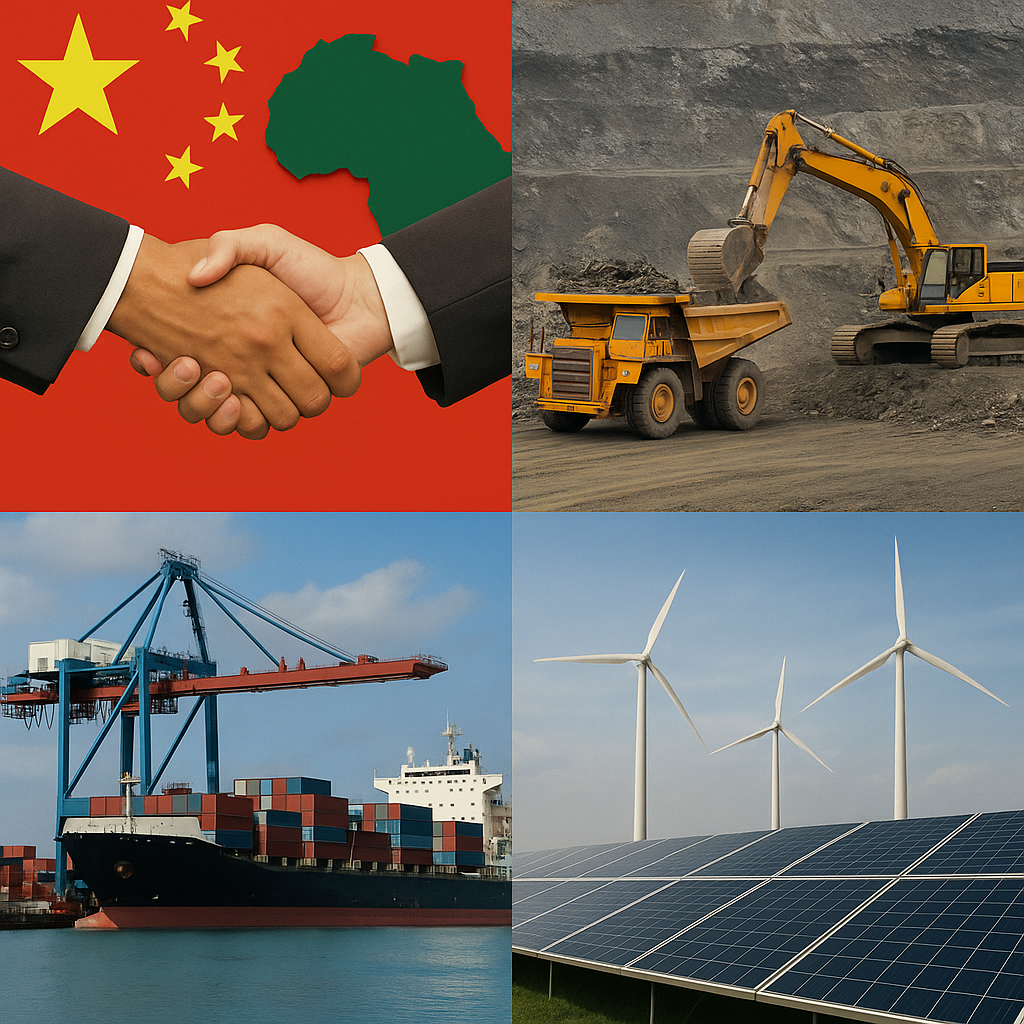
The U.S. relief came after months of lobbying. But what made Washington listen wasn’t just economic logic — it was geopolitical calculus. The United States sees Africa as a frontier in its competition with China and Russia. The tariff delay, in this light, is not generosity — it’s strategy.
And African nations, once again, are pawns on someone else’s board.

AfCFTA: Africa’s Underused Answer
If AGOA has shown Africa anything, it’s that dependence is a weakness — one that can be weaponized. But the continent has a tool in hand: the African Continental Free Trade Area (AfCFTA). In theory, AfCFTA is transformative — a single market of 1.3 billion people, designed to boost intra-African trade and reduce dependency on external powers.
But progress has been slow. Trade across African borders remains tangled in bureaucracy, poor infrastructure, and political hesitation. Regional integration is promised, but rarely practiced. The gap between ambition and action is wide — and dangerous.
If AGOA ends tomorrow, can Africa trade with itself? Can it sustain its industries? Or will it once again scramble for handouts and new patrons?
Time to Wake Up
Africa cannot afford to misread this moment. The tariff relief is not a reprieve — it’s an alarm bell. And if African governments treat it as anything less, they are setting their economies up for collapse.
It is time to invest not in survival, but in sovereignty. That means building competitive industries, linking markets across borders, and negotiating trade deals that respect African labor, resources, and futures.
Washington may have delayed the storm — but it is still coming. The choice for Africa is whether to face it armed or exposed.
AfriScoop will continue monitoring how African leaders respond in the coming months — whether they rise to this challenge or cling to a broken model. This story is not about U.S. tariffs. It’s about whether Africa will finally own its place in the global economy — or continue to lease it.
For opinion pieces, trade commentary, or to share regional impact stories, email us at:
✉️ newsdesk@afriscoop.org
🌐 www.afriscoop.org