Cardinal Sarah’s Isaac Miracle

Wasse Marlvine
7 Min Read
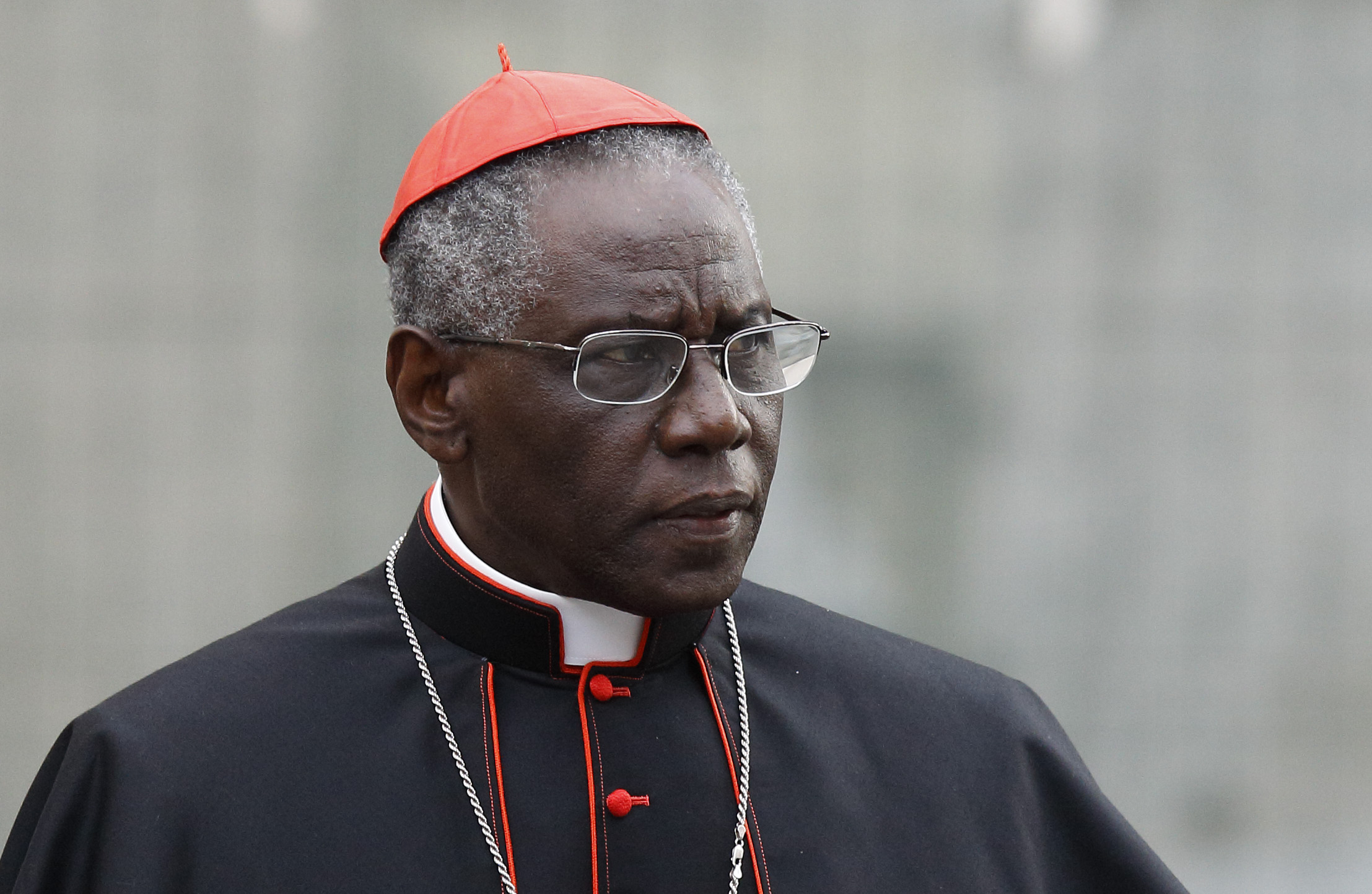
Cardinal Robert Sarah, prefect of the Congregation for Divine Worship and the Sacraments, is pictured at the Vatican in this Oct. 9, 2012, file photo. Cardinal Sarah, the Vatican's liturgy chief, has asked priests to begin celebrating the Eucharist facing east, the same direction the congregation faces. Although not commonplace, the practice is already permitted by church law. Cardinal Sarah made his request during a speech at the Sacra Liturgia conference in London July 5. (CNS photo/Paul Haring) See LITURGY-SARAH-ORIENTUM July 7, 2106.

The Pope Is Dead, But the Real Story Is in Africa

By Wasse Marlvine

April 23 2025/ Ourous, Guenea

The Vatican is shrouded in mourning. The Pope—global leader of over a billion Catholics—has passed, and the world turns its gaze to Rome. But while the incense rises and bells toll, we ask a question that many Africans are afraid to voice out loud:

Why does this concern us as much as it does?

Let’s be honest. Catholicism is not ours. Christianity, in its form most Africans know today, was imported, rebranded, and enforced—first with charm, then with chains. What started as a spiritual path was twisted into an imperial weapon. Our ancestors were baptized with one hand and brutalized with the other. But centuries later, we’ve adopted it, embraced it, and now we mourn the passing of its supreme pontiff as if it were our elder, our king, our own.

And maybe that’s fair. Faith knows no borders. But we cannot ignore the elephant in the Sistine Chapel.

His name is Cardinal Robert Sarah.

Guinean. African. Conservative. Powerful. And yet—utterly unelectable.

The whispers are growing louder: he’s a top contender to succeed the late Pope. But deep down, we all know the truth. The world is not ready for a Black Pope. The Church is not prepared for a Black Pope.

Let that sink in.

As the College of Cardinals prepares for the conclave to elect his successor, the global spotlight turns to Rome. Among the potential candidates is Cardinal Robert Sarah of Guinea, a figure who embodies the hopes and the frustrations of African Catholics.

Cardinal Robert Sarah: A Symbol of African Catholicism

Born in 1945 in Ourous, Guinea, Cardinal Sarah’s journey from a small West African village to the upper echelons of the Vatican is nothing short of remarkable. Ordained in 1969, he became the youngest bishop in the world at age 34 and was later appointed by Pope John Paul II to various significant roles within the Church. Known for his conservative theological views, Sarah has been a vocal critic of what he perceives as the secularization of the Church, particularly in the West.

Despite his prominence, many observers believe that his chances of becoming the next pope are slim. As reported by The Times, while an African pope could give the continent the voice it deserves, underlying racial and hierarchical biases within the Church make such a prospect unlikely.

Africa is home to over 176 million Catholics, a number that continues to grow rapidly. The continent’s vibrant faith communities are often cited as the future of the Church. Yet, when it comes to leadership, Africa remains on the periphery.

This paradox is not lost on African theologians and clergy. In a 2024 speech in Cameroon, Cardinal Sarah emphasized that African Church leaders are defending “the universality of the faith,” highlighting the continent’s commitment to the core tenets of Catholicism. 

However, the reluctance to embrace African leadership at the highest levels of the Church raises questions about the inclusivity and universality that Catholicism espouses.

The marginalization of African voices in global religious institutions is part of a broader pattern of cultural erasure. Traditional African spiritual systems, rich in philosophy and community values, have often been dismissed or demonized in the wake of colonialism and missionary activity.

As the world watches the Vatican’s next move, perhaps it’s time for Africa to reflect inward. The continent’s spiritual heritage is vast and profound. Reclaiming and valuing indigenous beliefs and practices could be a step toward spiritual autonomy and cultural renaissance.

Conclusion

The passing of Pope Francis marks the end of an era. As the Church looks to the future, the question remains: Will it embrace the diversity it preaches, or will it continue to sideline voices from the Global South?

For Africa, the answer may lie not in waiting for recognition from Rome but in affirming its own spiritual identity and leadership. And this is not about theology or doctrine. This is about power. About image. About who is allowed to be the face of global faith, and who is only ever allowed to be its follower.

How long will we play along in a game where the rules were never made for us to win?

Meanwhile, across the continent, our own stories, traditions, and faith systems rot in the shadows. We’ve let our cosmologies—rich, textured, ancient—be labeled as pagan, demonic, backward. We’ve allowed our ancestors to be exorcised from history in exchange for the illusion of inclusion.

And now, even in death, the white robes of the Vatican demand our reverence.

But here’s the truth: Africa needs to wake up.

We need to stop waiting for validation from institutions that were never built for us. We need to stop mourning thrones that would never let us sit. We need to reclaim the voices of our grandmothers, our griots, our priests, our gods—before they’re erased entirely.

The Pope is dead. May he rest.

But if we, as Africans, don’t begin to question why we mourn harder for foreign crowns than we do for our stolen kingdoms, we may never truly live.


Share This Article
Leave a Comment

Leave a Reply

Your email address will not be published. Required fields are marked *