Gabon Moves Toward Democratic Transition: A Pivotal Moment in Central African Politics
By Wasse Marlvine | AfriScoop News
Libreville, Gabon – April 2, 2025
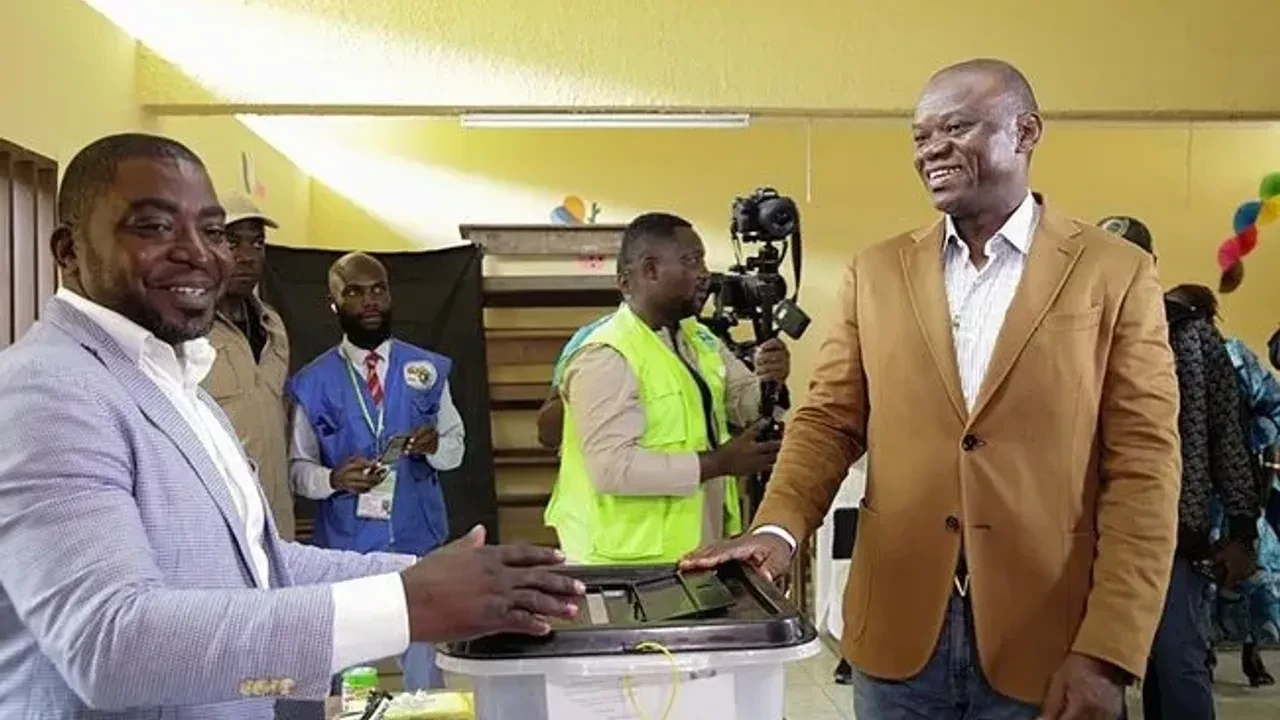
The political landscape of Gabon is at a critical juncture as the nation moves toward what is being hailed as a new chapter in its political history. Following the coup in August 2023 that ended President Ali Bongo’s 14-year reign, the country’s future now rests in the hands of Brice Oligui Nguema, the military leader who led the coup. Nguema, a once-overlooked military figure, has emerged as a key player in the country’s uncertain future. With presidential elections scheduled for April 12, 2025, Nguema is seeking to transition from the military leader who ousted the Bongo regime to a democratically elected civilian president.
For decades, Gabon has been a political enclave controlled by the Bongo family, with Ali Bongo succeeding his father, Omar Bongo, who ruled for over 40 years. The Bongo family’s grip on power was largely unchallenged, with allegations of corruption and authoritarianism clouding their governance. However, in August 2023, a faction of the military seized power in a coup, ousting Bongo, who was accused of rigging elections and mismanaging the country’s wealth.
Brice Oligui Nguema’s Rise to Power
After the coup, Nguema initially assumed power as the head of the Civic and Military Transition Council (CMT), declaring that his primary goal was to end the Bongo dynasty’s stranglehold on the country and restore a semblance of stability. Gabon, historically one of Africa’s wealthiest nations due to its oil exports, has faced rising tensions under the Bongo family’s rule, marked by political repression and economic inequality.
Now, Nguema has shifted his focus toward ensuring the country’s political transition remains on course. His announcement to run for president, stepping down from his military role, marks a critical moment for the country. Nguema’s candidacy is framed as an effort to “restore democratic legitimacy” to Gabon, but it is also a delicate balancing act. On one hand, he is promising free and fair elections and a new era of governance. On the other hand, many Gabonese citizens and international observers are questioning whether a coup leader can truly oversee a democratic process.
A Complex Path to Democracy
Critics have raised concerns about the transparency of the transition process. The junta’s decision to hold elections less than two years after taking power has sparked debates over whether Gabon is genuinely prepared for democracy or whether the military is consolidating power under the guise of reform. To address these concerns, Nguema has committed to holding free elections that reflect the will of the people and has vowed to restore Gabon’s international credibility.
However, the transition faces significant obstacles. Gabon’s institutions are still deeply shaped by the long-standing influence of the Bongo family. The political system, dominated by the Bongo-led Gabonese Democratic Party (PDG), has left little room for a meaningful opposition. Nguema’s transition, therefore, is not just about shifting political power—it’s about dismantling entrenched structures that have governed Gabon for decades.
Nguema’s campaign will undoubtedly rely heavily on his image as the man who ended the Bongo era. Supporters see him as a stabilizing force, someone who brought order to a country long-riddled by political unrest. The military, however, remains a powerful player in the background, raising questions about how much influence it will continue to exert over the country’s future.
International Reactions and Expectations
The international community, especially Western nations, will be watching closely as Gabon moves toward elections. Western governments have been critical of the coup and the loss of democratic processes in West and Central Africa, particularly after a wave of military takeovers in countries like Mali, Burkina Faso, and Guinea. These military coups have sparked concerns about the future of democracy in the region, and the world will be looking at Gabon’s transition as a potential indicator of the direction Central Africa is heading.
Gabon’s foreign partners are urging the junta to demonstrate a genuine commitment to democratic reforms. The European Union, United States, and African Union have all called for a transparent, inclusive electoral process. The question now is whether Nguema can fulfill these expectations or if the country will slip into a new form of authoritarian rule disguised as democracy.
The Role of Gabonese Citizens
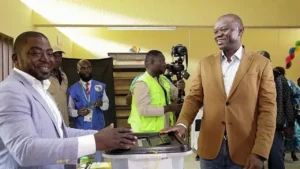
The future of Gabon will ultimately lie in the hands of its citizens. While there are signs of cautious optimism, the country’s history of electoral fraud, political repression, and lack of political freedom has left many skeptical. Gabonese citizens are yearning for change but remain unsure whether Nguema’s election will mark a genuine break from the past or if it will simply serve as another chapter in the Bongo family’s legacy of power and control.
Conclusion: A Pivotal Moment for Gabon and Central Africa
As April 12, 2025, draws closer, Gabon’s political future remains uncertain. Will Nguema’s transition be the beginning of a new era of democracy, or will it signal a continuation of authoritarian practices? While the country has made strides in moving away from the Bongo era, the path toward true democracy will require not only the dismantling of the old political order but the building of new institutions that reflect the will of the people. The coming months will be crucial as Gabon enters this new chapter, and the eyes of the world will be fixed on the country as it takes its first steps toward a democratic future.
For more updates on the unfolding political situation in Gabon, stay tuned to AfriScoop News.