Africa Desk Politics: Leadership Battles, Power Plays, and a Hint of Chaos
By Wasse Marlvine
The Throne is Empty – Who Will Sit on Africa’s Big Seats?
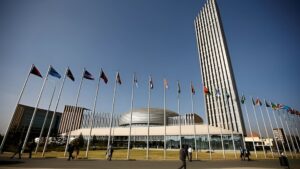
Across the continent, powerful institutions are playing musical chairs, and the beat is getting faster. The African Union (AU), the African Development Bank (AfDB), and regional blocs like ECOWAS and SADC are all undergoing leadership transitions. And as always, when power is up for grabs, the political temperature rises faster than a Dakar afternoon.
The stakes? Oh, just the small matter of whether Africa will finally call its own shots or keep letting foreign “partners” (read: economic babysitters) set the rules. The AU’s next chair, AfDB’s next president, and SADC’s new boss will decide whether Africa will be a powerful force in global affairs or just a guest at the grown-ups’ table, politely sipping tea while others carve up the economic pie.
The competition is fierce, and the question remains: Will the new leaders be lions or house cats?
African Union – New Chair, Same Old Excuses?
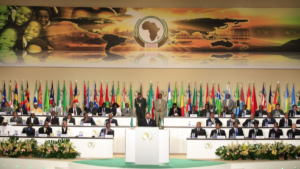
The African Union (AU) has recently undergone a significant leadership transition. In February 2025, during the AU summit, Mahmoud Ali Youssouf, Djibouti’s long-serving Foreign Minister since 2005, was elected as the new Chairperson of the African Union Commission (AUC).
Youssouf’s election followed a competitive race involving notable candidates:
Raila Odinga from Kenya: A prominent political figure and former Prime Minister, Odinga emphasized leveraging Africa’s natural and human resources to ensure prosperity. His campaign prioritized the African Continental Free Trade Area (AfCFTA), conflict resolution, and enhancing Africa’s global influence.
Richard Randriamandrato from Madagascar: An expert in governance and international relations, Randriamandrato focused on fostering solidarity among African nations amidst global competition, particularly concerning natural resources and the influence of international powers. He also advocated for a more proactive AU in conflict mediation and sustainable development.
During the campaign, all candidates underscored the importance of securing permanent African representation on the United Nations Security Council, addressing regional security challenges, and enhancing intra-African trade.
Youssouf’s election marks a pivotal moment for the AU as it seeks to navigate complex continental issues and assert Africa’s position on the global stage.
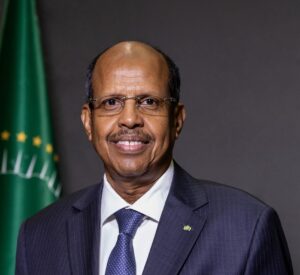
AUC Chairperson
The AU is searching for a new chairperson, and the list of candidates is as long as a Lagos traffic jam. The next leader must handle conflicts in Sudan, the DRC, and the Sahel while convincing member states to stop treating the AU like a decorative diplomatic accessory.
But here’s the thing: the AU loves grand summits, bold resolutions, and vague roadmaps that rarely lead anywhere. What Africa really needs is someone who can:
Speak less, act more. Less “we strongly condemn” statements, more actual peacekeeping.
Stop playing foreign diplomats like a game of Ludo. Why ask for Western funding to solve African conflicts when those same countries are busy selling weapons to both sides?
Make AfCFTA real. Right now, it’s easier for a goat to cross an African border than an entrepreneur trying to sell local goods.
Whoever takes the chair has two choices: lead Africa into an era of true self-reliance or keep dancing to a tune played from Washington, Brussels, and Beijing.
The AfDB – Will the Next President Break Up with the IMF?
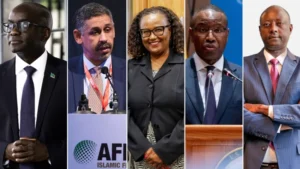
The African Development Bank (AfDB) has officially cleared five candidates for its upcoming presidential election scheduled for May 29, 2025. The contenders are:Business Insider Africa
Amadou Hott (Senegal): Former Minister of Economy, Planning, and Cooperation of Senegal, with extensive experience in development finance and investment banking.
Samuel Munzele Maimbo (Zambia): A seasoned economist who has held significant positions at the World Bank, focusing on financial sector development across Africa.
Tah Ould (Mauritania): An economist with a background in international finance and development, having served in various capacities within Mauritania’s financial institutions.
Abbas Mahamat Tolli (Chad): Former Governor of the Bank of Central African States (BEAC) from February 2017 to February 2024, and previously served as Chad’s Minister of Finance and Budget. Wikipedia
Swazi Tshabalala (South Africa): Currently serving as the Senior Vice President of the AfDB, bringing extensive experience in finance and banking sectors across Africa.
Each candidate brings a unique set of skills and experiences, setting the stage for a competitive election that will determine the leadership of Africa’s premier development finance institution. Punch
Over at the African Development Bank (AfDB), a new president will soon be in charge of shaping Africa’s economic future. If history has taught us anything, we should prepare for long-winded speeches about “African-led solutions,” followed by the usual dependence on Western financial institutions.
To be fair, the AfDB has done some good work, but its Achilles’ heel remains the IMF and World Bank, Africa’s favorite exes that it just can’t seem to leave. These institutions have a track record of pushing African nations into debt traps with economic policies so harsh, even a desert camel would struggle to survive them.
What we need is an AfDB leader who will:
Invest in African industries instead of Western-endorsed austerity measures.
Build a financial system where African countries trade in local currencies instead of the almighty dollar.
Stop taking economic advice from the same people who profit when Africa struggles.
The AfDB’s next boss has a chance to turn the bank into Africa’s own financial fortress instead of a polite money-lender that keeps asking the West for pocket change.
Regional Blocs – Where Diplomacy Meets Drama
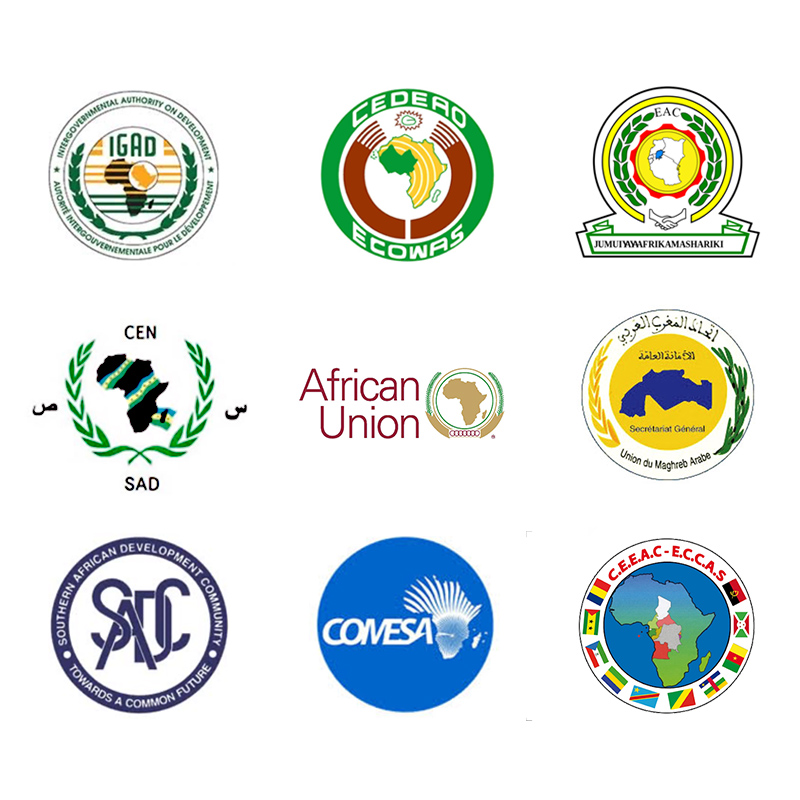
ECOWAS, SADC, and the EAC are all changing leadership, and the mood is… well, tense. The big question: Will these organizations finally start working together or keep acting like rival neighborhood football clubs?
ECOWAS is still recovering from its West African coup addiction – one by one, countries have been flipping from democracy to military rule faster than a DJ switches tracks at a Nairobi party. The new leadership must decide if it will keep imposing ineffective sanctions or try, for once, to solve problems with African-led solutions.
SADC is knee-deep in the DRC crisis – Its forces are trying to bring stability, but there’s a fine line between peacekeeping and picking a side.
EAC is struggling with border tensions and trade disputes – Because nothing says “regional unity” like arguing over who should control customs revenues.
The real challenge? Turning these blocs from talk shops into actual forces for African growth, security, and trade. Right now, they look like football teams that never win, but always have the best jerseys.
Final Thought: A Make-or-Break Year for Africa
2025 is a power-shifting year. New faces will take charge of Africa’s most powerful institutions, and their decisions will either move the continent closer to self-reliance or deeper into the pockets of foreign powers.
The irony? Africa is the richest continent on Earth but still lets others dictate its future.
The solution? Leaders who stop making excuses, stop looking for approval from Western capitals, and start building a continent where African interests come first. Because at the end of the day, if Africa doesn’t take charge of its own future, someone else will—and they already have their shopping lists ready.
Stay tuned as we track these leadership battles. The stakes are high, the tension is thick, and somewhere, right now, a candidate is rehearsing their victory speech in front of a mirror.
AfriScoop will be watching. 🚀