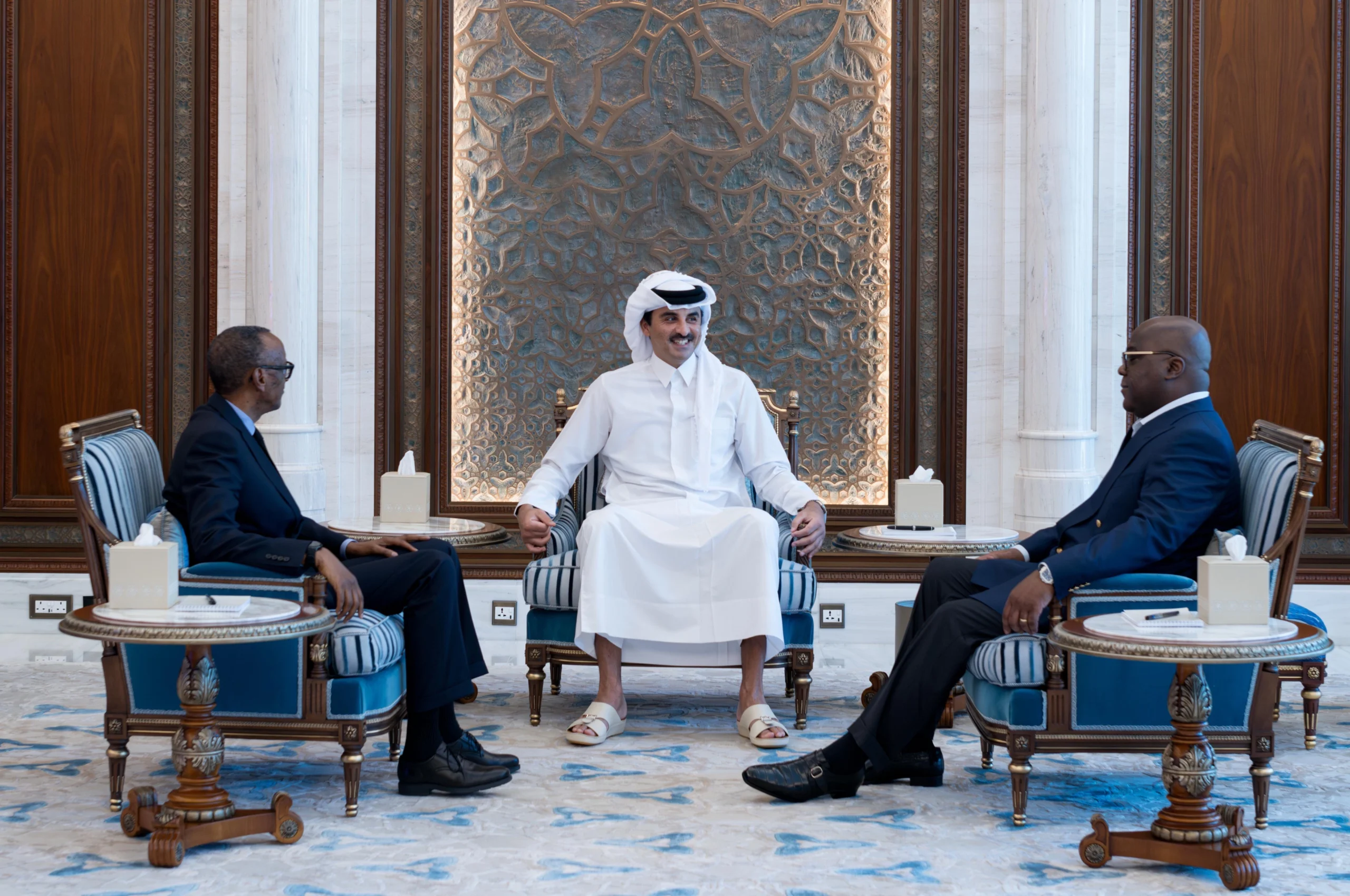
Direct Talks Between Congo and M23 Rebels Set for April 9: A Call for African Solutions
By Wasse Marlvine
Doha, Qatar – April 8, 2025
Africa must choose peace through unity, self-determination, and action, not by looking outward for answers.
The direct talks between the Democratic Republic of Congo (DRC) and the M23 rebels, set to take place in Doha, Qatar on April 9, 2025, offer a crucial moment in resolving a conflict that has destabilized the Great Lakes region for years. The outcome of these talks will not only determine the future of the DRC but also serve as a larger reflection of Africa’s ability to address its internal challenges.
Historically, conflicts in Africa, especially in the Great Lakes region, have been marked by ethnic tension, political instability, and the influence of external powers. The M23 rebellion, which began in 2012, is one example of this. Initially a group of former rebels who felt betrayed by the Congolese government, M23 has grown into a formidable armed force that controls key territories in the east. The root causes of the conflict—ethnic divisions, resource control, and the complex relationship between Congo and neighboring Rwanda—have long been exacerbated by foreign involvement, with many accusing Rwanda of backing the M23 rebels.
While these external factors have certainly complicated the situation, Africa’s greatest challenge lies in self-reliance. Too often, African leaders have looked outside the continent for solutions, allowing foreign powers to intervene in ways that serve their interests rather than those of African citizens. The talks in Doha could represent a significant shift in this dynamic, or it could simply be another round of negotiations with little substance.
Three Possible Futures:
1. Africa Chooses Its Own Path—A Self-Sufficient Future
In the best-case scenario, African leaders take this opportunity to demonstrate unity and self-determination, prioritizing the interests of their people over external influence. The Congo-M23 talks could spark a broader movement across the continent, where countries come together to address their issues internally, without relying on foreign mediators.
Such a shift would mark a turning point in African diplomacy, with African Union-backed solutions to conflicts becoming the norm. With a focus on peacebuilding, economic cooperation, and stronger regional alliances, Africa could begin to resolve conflicts, bolster its infrastructure, and unlock its vast potential for growth. The positive ripple effect would extend beyond Congo, fostering peace and prosperity across the continent. This would be a new era of African ownership, where issues are solved by Africans, for Africans.
2. Foreign Powers Take Control—Africa’s Sovereignty at Risk
On the other hand, U.S. or Western powers could seize this opportunity to further entrench their influence in Africa. In this scenario, America or other foreign nations may take on a central role in the negotiations, presenting themselves as the “saviors” of the DRC conflict. While such interventions may initially bring temporary stability, the long-term consequences could be dire for Africa’s autonomy.
As Congo President Felix Tshisekedi and M23 rebels sit down for talks in Qatar, international mediators could step in, offering their “help” in the form of peacekeepers, advisors, and negotiators. The West, especially the U.S., might present themselves as the much-needed saviors of Congo’s political and military crisis. They could argue that their intervention is critical for ensuring peace and stability, and they may propose solutions that seem attractive in the short term—such as financial aid, humanitarian assistance, or military support for peacekeeping missions.
However, as we have seen in other African conflicts, foreign involvement often comes with a cost. Once foreign powers, especially Western nations, gain a foothold in Africa, it becomes increasingly difficult for African nations to reclaim their autonomy. The West may use the ongoing conflict as leverage to secure trade deals, military access, and political influence—all while claiming to act in the interest of peace and security.
In exchange for foreign aid or military support, African countries might be forced into unfavorable trade agreements that give foreign companies exclusive rights to exploit local resources. This could mean that Congo’s natural wealth—resources that should be enriching the local population—ends up flowing out of the country into foreign hands, leaving the Congolese people with little benefit. The U.S., China, and European powers are all competing for access to these resources, and if Congo is forced into agreements with external powers, it could be locked into a pattern of exploitation that is reminiscent of colonial practices.
This scenario represents a dangerous form of neocolonialism, where foreign powers maintain their influence over African resources, military bases, and political agendas. African nations, rather than making decisions that serve their own people, could become beholden to the interests of these foreign powers. This would essentially put Africa in a state of neo-colonial dependence, where the continent’s future is dictated by the whims of outside forces, reinforcing the power dynamics that have hindered Africa’s growth for centuries.
Furthermore, once a foreign power has established a foothold in Africa—whether through military presence or economic agreements—it becomes much more difficult to challenge their influence. Africa’s socio-political and economic sovereignty may continue to diminish, and African nations will find themselves beholden to international forces whose priorities may not always align with the interests of African citizens.
The Militarization of Africa
Another concerning aspect of foreign intervention is the militarization of African politics. If Western nations step in to mediate the Congo conflict, they might send peacekeeping troops or advisors, ostensibly to assist with security. But these forces could become entrenched in the country, especially if there is a UN-backed mission or a U.S.-led coalition. Once foreign troops are stationed in Africa, they often remain for years, and the local government can become increasingly reliant on them for security, effectively surrendering control of their own military and defense infrastructure.
This militarized dependency could have broader implications for the continent’s security dynamics. Foreign countries might establish military bases in the DRC, using the country as a strategic hub for controlling East Africa and other key regions. Over time, this would allow these powers to dictate the security agenda of the entire region, shaping African military and diplomatic priorities to suit their own geopolitical interests.
Loss of African Agency
What is most damaging in this scenario is the loss of African agency. Africa has long struggled to assert its independence on the global stage, particularly in the face of colonial legacies and the modern-day influence of former colonial powers. In the case of the DRC, allowing foreign powers to dictate the outcome of the talks would reinforce the idea that African countries are unable to solve their own problems without external intervention.
This loss of agency can have lasting psychological and political consequences. It sends a message to the African populace that their leaders and institutions are weak, incapable of resolving even their own conflicts, and dependent on foreign powers for direction. It perpetuates the cycle of foreign intervention, where African nations are seen as incapable of self-determination and must rely on the West to dictate their future.
Conclusion: A Continent’s Future at a Crossroads
In this second scenario, while foreign intervention might initially bring some form of stability or a temporary ceasefire, it comes at a great cost to Africa’s sovereignty. The DRC and other African nations might find themselves locked into a cycle of dependency, where external powers control not only their military and political future but also their economic and resource management. This type of intervention undermines the potential for self-sustained peace and development, reinforcing a system where African countries remain subservient to external influences, rather than controlling their own destinies.
3. Unresolved Conflict—Africa’s Growth Stunted by Inaction
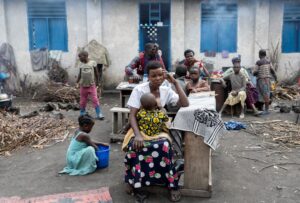
If the conflict continues without meaningful resolution, the repercussions for Africa could be severe. The Congo war is just one example of many unresolved conflicts across the continent, from the Sahel to Somalia. If African leaders fail to find lasting solutions, civil unrest, human rights violations, and mass displacement will continue to disrupt regional stability and economic development.
The absence of a clear resolution could also embolden other armed groups and foster more violence, especially if neighboring countries become further entangled. Africa’s reputation on the global stage would suffer, with more foreign intervention and less trust in African governments’ ability to handle their own affairs. Furthermore, with the continent’s resources continuously under threat, the African youth, who are its greatest asset, may increasingly turn to other regions in search of better opportunities, further stalling Africa’s potential.
The Choice Is Ours
These scenarios highlight the stakes involved in the coming talks. Africa’s future is not a passive one—it requires active leadership, both from its governments and from its people. The talks in Doha could be the beginning of a new chapter, where African countries learn to rely on their own strength, diplomacy, and unity to solve internal problems. Or, they could fall into the trap of external intervention, where Africa remains a pawn in global geopolitics, unable to control its destiny.
The question is simple: Will Africa choose self-determination and unity, or will it continue down a path that glorifies external influence and the interests of foreign powers? The choice is in the hands of African leaders, and it’s time for them to put the people first—because, ultimately, it’s the people of Africa who will bear the consequences.