Uganda’s President Museveni Faces Growing Opposition Amid Economic Struggles
By Wasse Marlvine
Kampala | April 4, 2025
A Nation on Edge: Uganda’s Economic Crisis and the Challenge to Museveni’s Rule
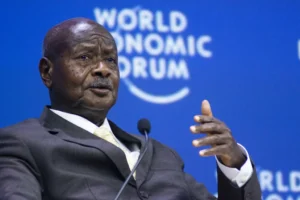
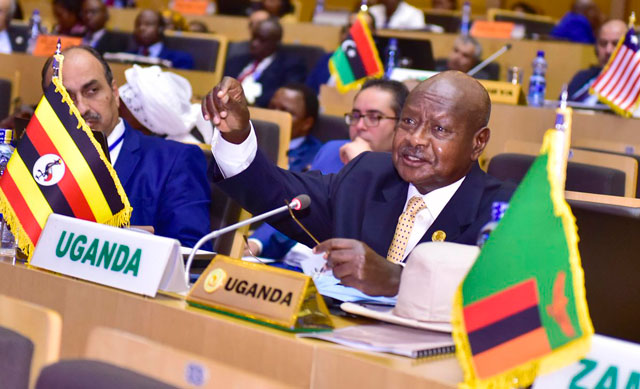
Uganda, one of Africa’s most enduring political landscapes, is currently at a crossroads. President Yoweri Museveni, who has held power for more than three decades, now finds his leadership tested by an economic crisis that has left many Ugandans struggling to survive. Once celebrated for his role in stabilizing the country after years of conflict, Museveni’s regime now faces increasing criticism from opposition forces, youth movements, and the general public. The question is no longer whether he will remain in power, but how long he can retain control as economic hardship stirs growing unrest.
Economic Woes and Public Discontent
For years, Uganda’s economic growth seemed promising, with steady expansion in sectors such as agriculture, oil, and services. However, in recent times, the country’s economic performance has faltered. Rising inflation, the devaluation of the Ugandan shilling, and increasing unemployment have sent shockwaves through the population, pushing many Ugandans into poverty.
One of the most visible signs of Uganda’s economic struggles is the escalating cost of living. Basic goods, from food to fuel, have become prohibitively expensive for ordinary Ugandans. In particular, rural communities, who were once the backbone of the country’s agriculture-driven economy, are now facing severe economic hardship. This has led to widespread frustration with the government’s failure to provide a sustainable economic recovery plan.
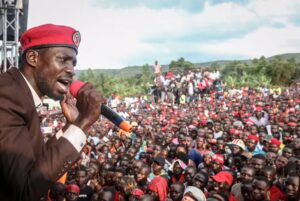
Youth unemployment, in particular, has reached critical levels. More than 60% of Uganda’s population is under the age of 25, and the lack of job opportunities has contributed to widespread disillusionment with Museveni’s government. As the economy continues to struggle, so too does the public’s faith in the government’s ability to deliver on its promises of prosperity.
The Rise of Opposition Movements
In the face of these growing challenges, opposition movements in Uganda are gaining momentum. Politicians such as Robert Kyagulanyi (Bobi Wine), who rose to prominence during the 2021 presidential election, have become symbols of defiance against the long-serving leader. Bobi Wine’s call for a political transformation and his focus on youth empowerment resonate with many who are dissatisfied with Museveni’s decades-long rule.
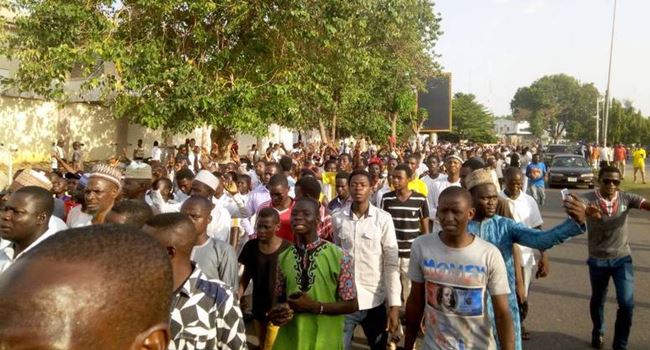
Museveni’s critics argue that his leadership has been marked by corruption, cronyism, and a disregard for the needs of ordinary Ugandans. These criticisms are not new, but the economic crisis has made them more urgent and palpable. The youth-led protests that erupted in 2020, demanding greater political freedoms and economic opportunities, have continued to simmer, and the frustrations of the young generation are increasingly directed toward the president.
Even within Museveni’s own party, there are signs of discontent. A growing number of his former allies are voicing concerns about the lack of political reforms and the continued concentration of power in the hands of a few individuals close to the president. These internal fractures suggest that Uganda’s political system may be on the verge of a significant shift.
A Comparison of Economic Visions: Museveni vs. Traoré – The Power of Youthful Leadership
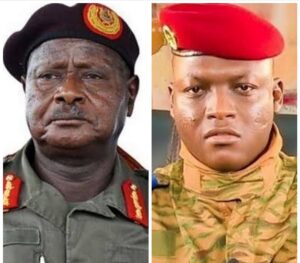
The age gap between Yoweri Museveni (75) and Ibrahim Traoré (36) represents more than just a number—it is a symbol of the shifting political landscape across Africa. Museveni’s three-decade rule has often been associated with a slow-moving economy, heavy reliance on foreign aid, and increasingly ineffective policies that have failed to keep up with the demands of a rapidly growing, youthful population.
By contrast, Ibrahim Traoré, who rose to power after a military coup in 2022, represents a new generation of African leadership eager to tackle these challenges head-on. At just 36, Traoré embodies the potential for dynamic, youth-driven reforms. Unlike Museveni, who has been in power for over 30 years, Traoré is acutely aware of the needs of the younger population, which makes up the majority in his country. His administration is focused on agricultural development, local production, and regional trade, attempting to free Burkina Faso from the dependence on foreign imports and foreign aid.
When comparing the economic approaches of these two leaders, the contrast is clear. While Museveni’s Uganda has continued to rely heavily on external sources of funding and foreign investments, often with limited success in driving long-term economic growth, Traoré’s Burkina Faso is prioritizing self-sufficiency and job creation for youth. His government has placed an emphasis on local production, encouraging small-scale farmers, and ensuring food security—an area where Uganda has struggled despite its agricultural potential.
This generational difference is not isolated to Uganda and Burkina Faso. Across Africa, younger leaders are stepping up to confront the economic challenges left by their predecessors. For instance, Ibrahim Mohamed Solih of the Maldives, who is still in his 40s, has taken bold steps toward economic diversification and regional collaboration. Similarly, Teodoro Obiang of Equatorial Guinea, at 81, faces growing criticism for a stagnant economy and the continued reliance on oil exports.
The Growing Trend: Young Leadership as a Catalyst for Economic Transformation
Across the continent, the demand for young leadership is growing. As the African population becomes increasingly youthful—more than 60% of Africans are under the age of 25—leaders like Ibrahim Traoré are seen as more in tune with the needs of this new generation.
Younger leaders are often more adaptable, open to new economic models, and more willing to take risks in order to build industries that cater to their citizens’ needs. From Burkina Faso to Ethiopia and beyond, the focus is shifting toward sustainable growth, regional partnerships, and empowerment of youth. These approaches stand in stark contrast to the long-standing leaderships of older figures like Museveni, Paul Biya of Cameroon, or Teodoro Obiang of Equatorial Guinea, who have been slow to adjust to the needs of younger, more connected populations.
For Uganda, the economic status quo—marked by high unemployment, rising inflation, and reliance on foreign aid—has created a sense of disillusionment among the youth. Bobi Wine, an opposition leader and youth icon, represents the frustration of the younger generation, who feel that Museveni’s policies have largely left them behind.
International Pressure and Diplomatic Struggles
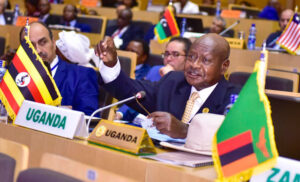
Uganda’s economic and political struggles have not gone unnoticed on the international stage. The country’s relationship with key foreign partners, particularly the United States and the European Union, has been strained due to concerns over human rights abuses, political repression, and lack of democratic reforms.
Museveni’s government has been accused of silencing opposition voices, stifling press freedom, and using violence against political dissidents. In 2021, during the presidential election, there were widespread reports of electoral violence and harassment of opposition figures, raising concerns about the legitimacy of Uganda’s democratic process. The international community has called for greater political freedom, an end to repression, and genuine reforms that can address the country’s deepening economic crisis.
However, Museveni has remained defiant, asserting that Uganda’s sovereignty is paramount and rejecting outside interference in the country’s internal affairs. Despite this, the continued international criticism has further isolated his government, leaving Uganda vulnerable to economic sanctions and international condemnation.
Looking Ahead: Can Museveni Adapt or Will He Face a Political Reckoning?
As Uganda moves into 2025, the question that looms large is whether President Museveni can adapt to the changing realities of his country. His leadership is under increasing pressure as the economic crisis deepens and opposition movements gain ground. While he remains in control of the military and the security apparatus, his grip on the political landscape is weakening.
The future of Uganda is increasingly tied to the younger generation, who are demanding economic opportunity, political freedom, and accountability from their leaders. As opposition movements grow in strength and political discontent rises, Museveni faces the difficult task of responding to these demands without losing control.
For the common Ugandan, the days of political stability under Museveni’s rule are beginning to feel like a distant memory. The economic struggles, coupled with mounting frustrations over political repression, are pushing many to question whether the president’s long reign has truly been beneficial to the country.
Museveni’s Legacy: A Question of Leadership in a Changing Africa
The coming months and years will be crucial in determining whether Museveni can navigate the pressures of the economy, political opposition, and international scrutiny. The youth of Uganda are demanding change, and the question remains: Will Museveni evolve and rise to the occasion, or will he cling to power at all costs, risking further instability for the country?
As Uganda’s political future hangs in the balance, the actions of President Museveni will determine whether the country can overcome its economic struggles and move toward a more democratic and prosperous future or if it will descend into deeper political and social unrest.
Uganda’s political landscape is evolving, and the time for change may be closer than ever before.