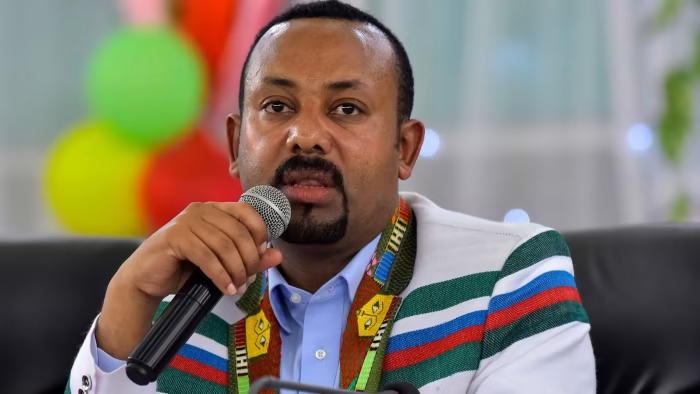
Abiy Ahmed Faces Growing Domestic Pressure Amid Tigray Conflict
By Wasse Marlvine
Addis Ababa | April 4, 2025
A Nation at Crossroads: Ethiopia’s Battle for Peace and Political Stability

In the heart of the Horn of Africa, Ethiopia stands at a critical juncture. Prime Minister Abiy Ahmed, once heralded as a beacon of peace and reform, now finds himself in a battle not just for political survival but for the soul of the nation. Since taking office in 2018, Abiy’s rise was seen as the dawn of a new era. His bold reforms, including the 2018 peace deal with Eritrea and his efforts to open up Ethiopia’s economy and political system, won him a Nobel Peace Prize in 2019. However, the Tigray conflict that erupted in late 2020 has dramatically shifted the trajectory of his leadership, leaving Ethiopia deeply divided and uncertain about its future.
The Tigray Conflict: A Shattered Dream of Unity
What began as a regional power struggle has now become one of the deadliest and most complex conflicts on the continent. The war between the federal government and the Tigray People’s Liberation Front (TPLF) has escalated, claiming thousands of lives and displacing millions of Ethiopians. Human rights abuses, including reports of ethnic cleansing, war crimes, and famine, have tarnished Abiy’s once-promising reputation as a reformist leader. Despite a peace agreement in late 2022, the scars of the war remain deep, with fragile ceasefires in place but no resolution to the underlying political and ethnic tensions that have fueled the conflict.
For Abiy, the question now is not only about ending the fighting but about healing a deeply fractured society. His government faces significant pressure from the international community to address human rights violations, bring perpetrators of war crimes to justice, and ensure accountability within his own ranks. But the path forward is complicated. Ethiopia is a land of diverse ethnic groups, each with their own grievances, and the Tigray conflict has exacerbated long-standing ethnic divisions that challenge the unity of the nation.

Rising Domestic Pressures: The Tigray Legacy
Domestically, Abiy faces mounting criticism from various quarters. The Tigray conflict has made it difficult for him to maintain the image of a progressive, unifying leader. Instead, he is increasingly seen as a leader who has allowed political and military leaders to perpetuate violence, leading to widespread suffering. The failure to deliver on promises of democratic reform has also eroded his support among pro-democracy activists and youth movements, many of whom once saw him as a symbol of change.
The Oromo protests, particularly in 2020 and 2021, are another flashpoint. Abiy, an ethnic Oromo himself, promised reforms that would empower the Oromo people, who have long been marginalized. However, his handling of the protests, particularly the violent crackdown on demonstrators, has led to growing disillusionment among the Oromo community. This has created significant friction between Abiy and his own ethnic base, further complicating his position.
International Scrutiny and Pressure
On the international stage, Abiy’s government is under intense scrutiny. Western powers, including the United States and the European Union, have imposed sanctions, and some countries have called for an arms embargo on Ethiopia. Human rights organizations have been vocal in their condemnation of the Ethiopian government’s actions during the war, particularly in relation to the humanitarian crisis in Tigray. Though a peace agreement was signed, human rights groups remain skeptical about Abiy’s ability or willingness to implement the terms fully.
The Ethiopian government has also been accused of restricting press freedom and curtailing political dissent, which undermines Abiy’s narrative of reform. Critics argue that his government has become increasingly authoritarian, stifling opposition voices and consolidating power in the hands of a few. These actions risk eroding the democratic gains Ethiopia had made prior to the conflict.

The Path Forward: Reconciliation or Further Fragmentation?
The road ahead for Abiy Ahmed is one fraught with uncertainty. Will he manage to steer Ethiopia toward national reconciliation, or will the ethnic divisions that have been exacerbated by the Tigray conflict tear the country apart? The hope for lasting peace hinges not only on ending the violence but on addressing the deep political and ethnic grievances that have long plagued Ethiopia.
Abiy’s promises of democracy and reform now ring hollow for many, and the calls for accountability and justice continue to grow louder. The international community is watching closely to see whether Abiy can break from the cycle of authoritarianism that has plagued many African nations or if his leadership will fall into the same patterns of repression as his predecessors.
Ethiopia’s Future: A Call for Leadership
As Ethiopia grapples with its future, the actions of Abiy Ahmed will be pivotal. The 47-year-old prime minister must find a way to balance the competing demands of political stability, ethnic reconciliation, and human rights. His leadership will determine whether Ethiopia becomes a beacon of peace and democracy in the Horn of Africa or remains mired in division and conflict.
For the Ethiopian people, the stakes are high. The younger generation, who were inspired by Abiy’s promises of change, are now looking for concrete results. The question is whether Abiy can deliver on his reform agenda or whether he will become just another African leader who failed to break free from the continent’s long-standing cycles of conflict and authoritarianism.
Ethiopia’s future is uncertain, but one thing is clear: Abiy Ahmed’s legacy will be shaped by his ability to reconcile a fractured nation and lead it toward a truly democratic and just society. The world watches as this historic leader faces perhaps his greatest test yet.