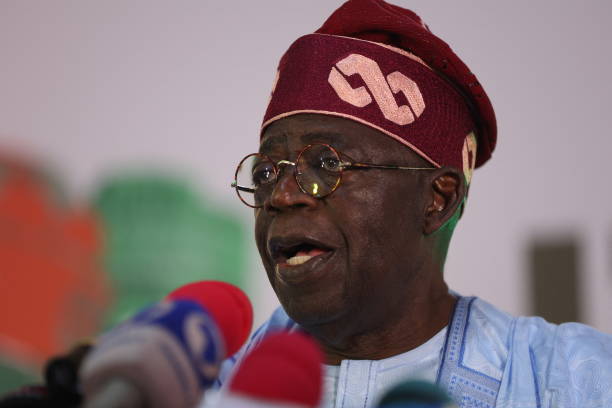
Tinubu’s Leadership Shake-Up: Reform or Power Consolidation?
Nigeria’s Leadership Purge Continues.
By Wasse Marlvine
Abuja, Nigeria. April 2, 2025
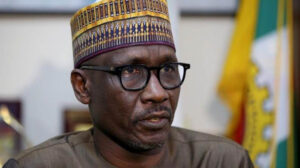
In yet another dramatic power play, President Bola Ahmed Tinubu has fired the entire board of the Nigerian National Petroleum Company Limited (NNPC), replacing key figures, including Group Chief Executive Officer (GCEO) Mele Kyari and Board Chairman Pius Akinyelure. The shake-up comes amid a broader pattern of dismissals across government institutions, signaling Tinubu’s determination to reshape Nigeria’s economic leadership—whether for better or worse remains to be seen.
The president has tapped Bashir Bayo Ojulari, a former Shell Nigeria executive, as the new GCEO, while Ahmadu Musa Kida, formerly of Total, steps in as the new Non-Executive Chairman. The appointments immediately raise eyebrows: two men from multinational oil giants now leading a national company that, for decades, has been plagued by accusations of mismanagement, corruption, and resource exploitation.
A Step Toward Reform or More of the Same?
The NNPC has long been Nigeria’s most influential yet controversial institution, handling the lifeblood of the economy—oil revenues that make up 70% of exports and more than half of government income. Tinubu’s administration insists that this leadership overhaul is aimed at increasing efficiency, tackling oil theft, and preparing the company for an eventual public offering. But will putting former executives of companies with deep vested interests in Africa’s resources be the solution—or a deepening of the problem?⁹
Critics argue that placing industry insiders in top government roles has historically benefited the multinationals rather than the people. Shell and Total, while undeniably experienced in energy management, have also been accused of prioritizing foreign profits over local development. The big question: will these new appointments bring true reforms, or will they ensure the continuation of an old system under a different name?
Tinubu’s Firing Spree: Strategy or Instability?
This move follows a pattern of leadership purges under Tinubu’s administration. Just last month, he dismissed Central Bank Governor Yemi Cardoso, citing the need for financial system “stability.” Before that, he sacked the entire leadership of the Nigerian Customs Service, claiming inefficiencies in revenue collection. And in a high-profile move, he removed all service chiefs in the military, restructuring Nigeria’s security apparatus.
Most recently, Tinubu declared a state of emergency in Rivers State, an oil-rich region critical to Nigeria’s economy. This led to the suspension of Governor Siminalayi Fubara, his deputy, and all state lawmakers for six months, citing escalating political crises and recent pipeline vandalism. Retired Vice Admiral Ibok-Ete Ibas has been installed as interim administrator. The Nigerian Bar Association has criticized the suspension of elected officials as unconstitutional, warning that a state of emergency should not mean the dissolution of democratic structures.
What’s Next for Nigeria—and Africa?
Tinubu’s rapid restructuring of Nigeria’s leadership is either a bold attempt to fix the system or a strategic move to consolidate power. The inclusion of former executives from multinational corporations in key national leadership roles raises important questions about whose interests will truly be served.
For now, Nigeria—and Africa—must watch closely. Will these changes bring transparency and progress, or simply reinforce the grip of powerful corporations and political elites over Africa’s resources? Only time will tell, but AfriScoop will be tracking every development as it unfolds.