South Sudan’s Peace Deal in Ruins
By Wasse Marlvine
Is War Inevitable?
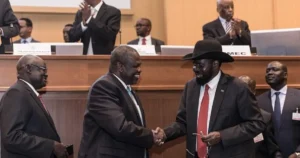
South Sudan, Africa’s youngest nation, has once again found itself on the brink of collapse as the 2018 peace agreement officially crumbles. The fragile truce between President Salva Kiir and opposition leader Riek Machar was shattered after government forces stormed Machar’s residence, placing him and his wife, Interior Minister Angelina Teny, under house arrest.
The arrest sent shockwaves through the political landscape, prompting Machar’s Sudan People’s Liberation Movement-in-Opposition (SPLM-IO) to declare the agreement dead. The peace deal, brokered by regional powers, was meant to end years of brutal civil war that left hundreds of thousands dead and millions displaced. However, with tensions flaring once more, fears of a return to widespread violence are mounting.
What’s Next? A Nation on the Edge
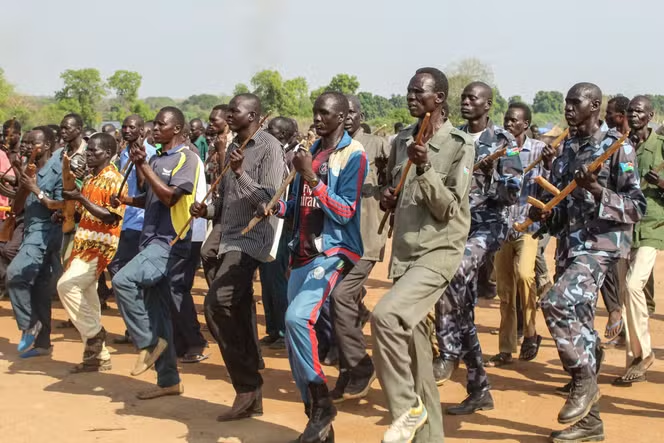
With the peace deal in ruins, South Sudan stands at a dangerous crossroads. The international community, including the African Union and the United Nations, has called for calm, but their words have done little to ease growing fears. Reports from Juba indicate rising tensions, with Machar’s supporters vowing resistance and military deployments increasing in key areas.
The risk of ethnic violence looms large, as past conflicts have often taken on tribal dimensions. The world has seen this movie before—political arrests escalate into full-blown war, civilians pay the price, and Africa is left to pick up the pieces. But this time, will the continent take charge of its own destiny?
The Bigger Picture: African-Led Peace or More Foreign Meddling?
The collapse of this deal raises urgent questions about Africa’s ability to resolve its conflicts without Western interference. Regional blocs like the African Union (AU) and the Intergovernmental Authority on Development (IGAD) have repeatedly struggled to enforce peace agreements, often sidelined by international actors with their own agendas.
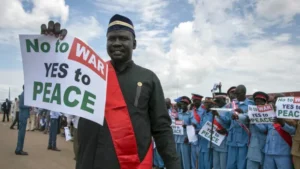
If South Sudan spirals back into war, it won’t just be a local tragedy—it will serve as yet another example of Africa’s failure to secure its own peace without external “saviors” stepping in to dictate terms. The AU’s silence is deafening. How many more failed peace agreements will it take before Africa rethinks its entire approach to conflict resolution?
AfriScoop will continue tracking developments as the situation unfolds.